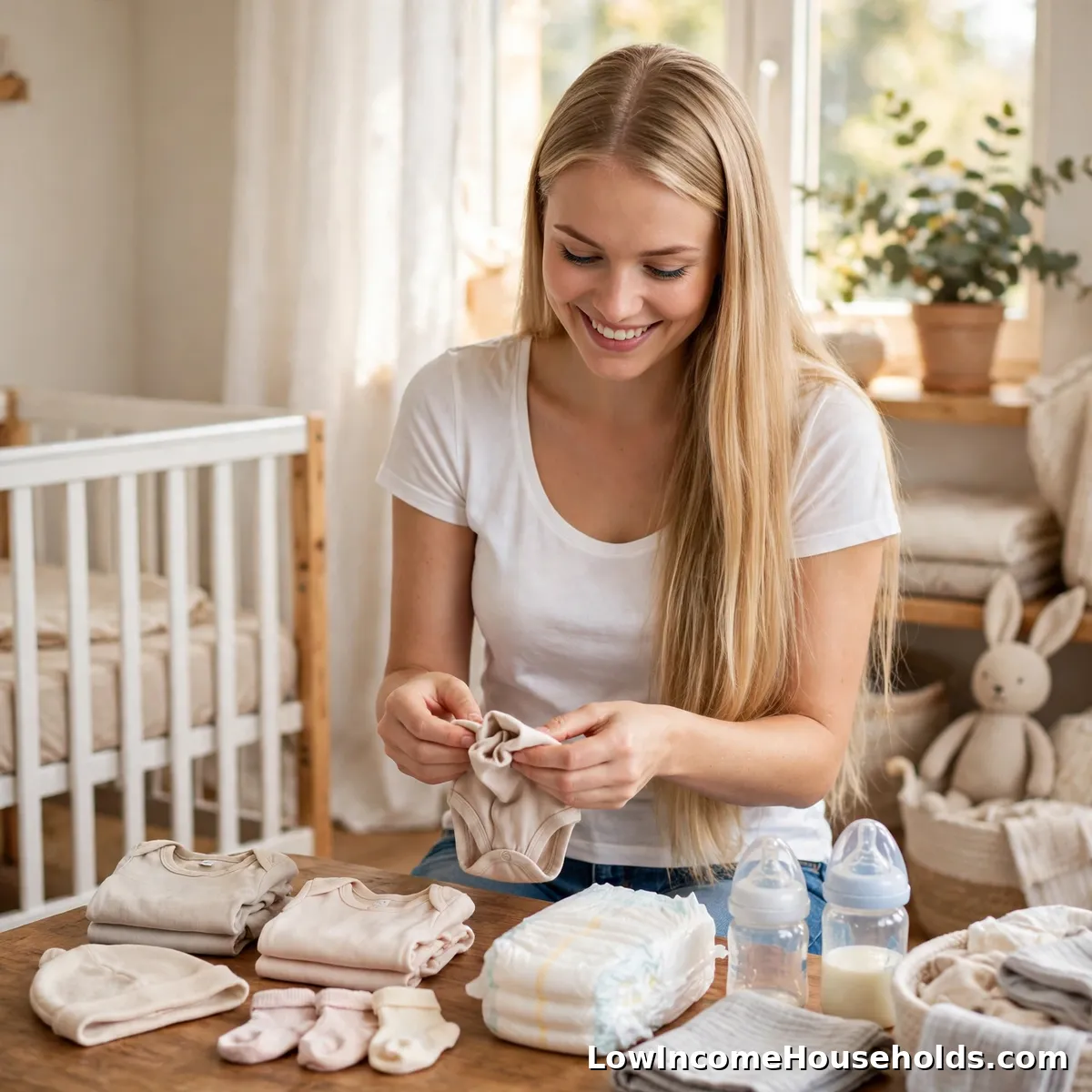
New and expectant parents who are low income can access a wide range of free baby items including diapers, formula, car seats, cribs, strollers, baby clothes, and other essential supplies. Government programs like WIC and nonprofit organizations provide millions of dollars in free baby supplies every year to families who need help.
Programs like the National Diaper Bank Network, Baby2Baby, Safe Kids Worldwide, and Cribs for Kids help ensure every baby has the essentials regardless of family income. Many hospitals, health departments, and community organizations also distribute free baby supplies.
Table of Contents
Free Diapers for Low Income Families
Diapers are one of the most expensive baby essentials, costing families $70-$80 per month or more. The National Diaper Bank Network operates over 200 diaper banks across the United States, distributing millions of free diapers annually to families in need.
Where to Get Free Diapers
- National Diaper Bank Network: 200+ diaper banks nationwide
- Baby2Baby: Distributes diapers through partner organizations
- Community action agencies: Many provide free diapers to low income families
- Church diaper drives: Local churches collect and distribute diapers
- WIC offices: Some WIC locations distribute free diapers
- Pregnancy resource centers: Free diapers for new and expectant mothers
Free Baby Formula Through WIC
The WIC program is the largest source of free baby formula in the United States. WIC provides free infant formula, baby food (fruits, vegetables, cereals, and meats), and breastfeeding support to eligible mothers and children. WIC serves approximately half of all infants born in the U.S.
To qualify for WIC, pregnant women, breastfeeding mothers, and children under age 5 must have household incomes at or below 185% of the Federal Poverty Level. WIC benefits are provided through an EBT card that can be used at authorized grocery stores.
Free Car Seats
Free car seats are available through Safe Kids Worldwide, local health departments, fire stations, hospitals, and community organizations. Many states have car seat distribution programs funded through highway safety grants. Some hospitals provide free car seats to low income parents before discharge.
Free Cribs and Safe Sleep Items
Cribs for Kids and similar programs provide free Pack-n-Play portable cribs, crib mattresses, fitted sheets, and sleep sacks to reduce the risk of sleep-related infant deaths. Many health departments, hospitals, and community organizations distribute free safe sleep kits to qualifying families.
Free Baby Clothes
Free baby clothing is available through pregnancy resource centers, church donation closets, community baby showers, Once Upon a Child stores (some have free programs), consignment store charity programs, and social media parent groups. Many communities organize regular baby clothing swaps where parents trade outgrown items.
Government Programs for Baby Supplies
Several federal and state programs help cover the costs of baby essentials. WIC provides food and formula. Medicaid covers prenatal care and delivery. TANF (Temporary Assistance for Needy Families) provides cash assistance that can be used for baby items. Some states have specific baby supply programs funded through social services agencies.
Nonprofit Baby Item Programs
Baby2Baby has distributed over 300 million essential items to children living in poverty. Other organizations like Sweet Cheeks Diaper Bank, Help a Mother Out, Bundled Blessings, and local baby item banks provide free supplies to qualifying families. Contact your local United Way (211) for baby supply resources near you.
Frequently Asked Questions
Contact the National Diaper Bank Network to find a diaper bank near you. Community action agencies, churches, pregnancy resource centers, and some WIC offices also distribute free diapers to low income families.
Apply for WIC through your local health department. WIC provides free infant formula, baby food, and nutrition support to eligible pregnant women, new mothers, and children under 5 with income at or below 185% of the Federal Poverty Level.
Yes, contact Safe Kids Worldwide, your local fire station, health department, or hospital. Many distribute free car seats to low income families. Some states have specific car seat programs funded through highway safety grants.